All articlesGuide
Ghost Mannequin Photography: The Complete 2026 Guide
How invisible mannequin shots are made, where they still work, and when converting them to on-model imagery pays off.

Ghost mannequin — invisible mannequin, hollow man, whatever your studio calls it — is the technique that gives a garment three-dimensional shape without a person in it. Done well it looks effortless. Done at catalogue scale it is one of the most labour-intensive formats in e-commerce photography.
Here is how it is actually produced, what it is good for in 2026, and when it makes more sense to convert the archive to on-model imagery instead.
How the shot is made
The garment is dressed on a mannequin — usually a magnetic or segmented one — and steamed and pinned into shape. Then at least two exposures are taken:
- The main shot, garment on the mannequin, front on.
- The inside shot, typically the collar and the back of the neck, with the garment turned or draped so the interior is visible.
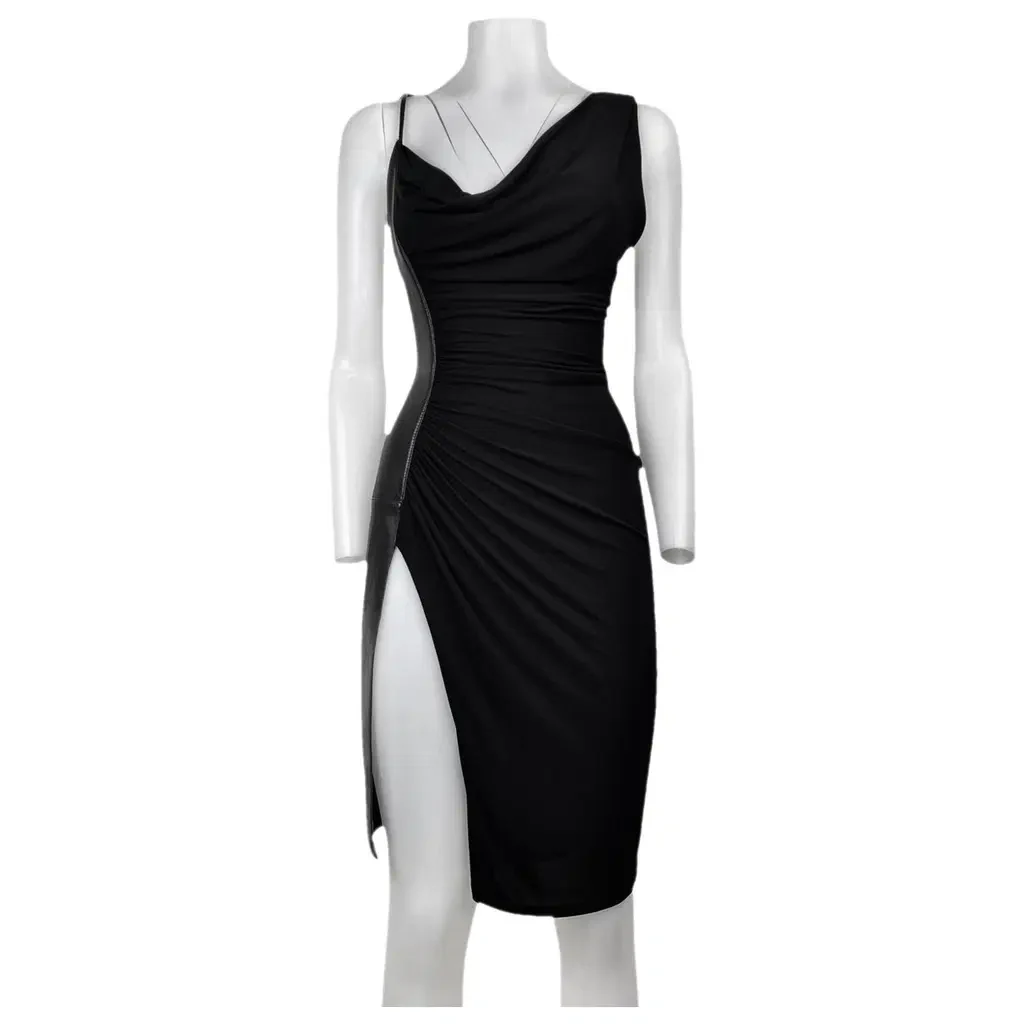
In post-production the mannequin is masked out and the interior exposure is composited into the neck opening, so the viewer sees through the collar to the inside of the garment. Sleeves, hems and openings are cleaned the same way. Colour is matched to the physical sample, and the result is placed on a plain background at the marketplace’s required crop.
The visible costs are the studio and the stylist. The real cost is the compositing: it is per-garment handwork, and it does not get cheaper with volume the way a packshot does.
What ghost mannequin is genuinely good at
- Construction. Shoulder line, collar, sleeve set, hem — visible and undistorted.
- Colour fidelity. No skin tone in the frame to pull the white balance around.
- Consistency. Every item in the same position, which makes for tidy category grids.
- Marketplace compliance. Many marketplaces prefer or require a plain, person-free product view.
For technical categories — shirting, tailoring, uniforms, workwear — it remains an excellent primary product image.
What it cannot do
Nobody has ever been moved by a hollow jumper.
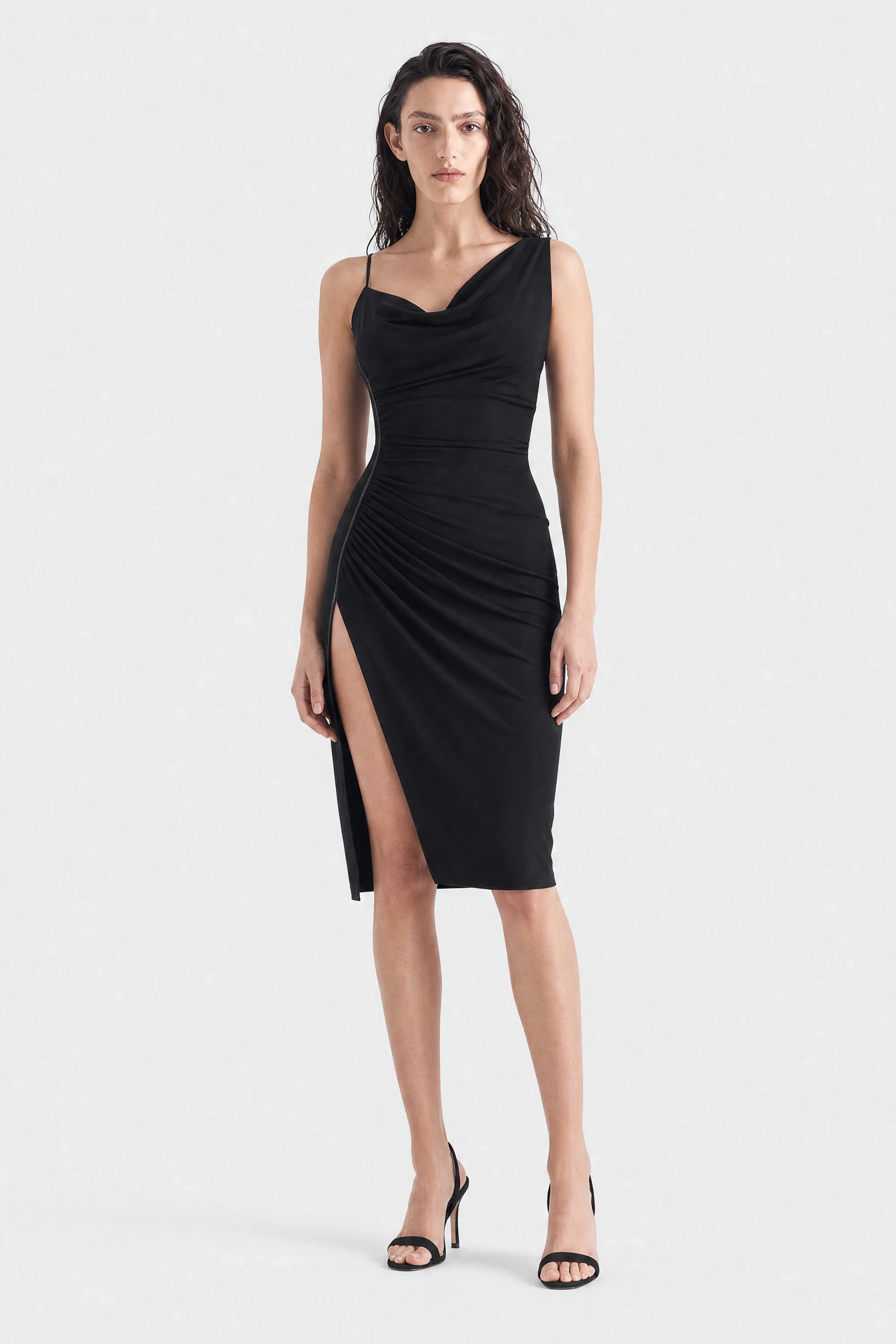
It cannot answer fit or drape on a body, and it cannot carry a brand mood. A ghost mannequin shot of an oversized coat tells you the coat exists; it does not tell you where the shoulder seam lands on a person, how the hem falls when walking, or how it is styled. That gap is where returns come from, and it is the argument for pairing it with on-model imagery — the trade-off we set out in Flat Lay vs On-Model.
It also has an aesthetic ceiling. Campaign and lifestyle imagery has to come from somewhere else.
Quality checklist before publishing
- The neck composite reads as one continuous garment — no soft edge where the interior was dropped in.
- Shoulders and sleeves are symmetrical unless the design is not.
- No pins, clamps, tape or mannequin edges left in the frame.
- Fabric weight looks plausible: a heavy coat should not float.
- Colour matches the sample under a controlled light, not the studio monitor.
- Crop, resolution and background match the platform spec exactly.
When to convert rather than re-shoot
Most brands with a ghost mannequin archive are sitting on a large, well-lit, colour-accurate library of garments in a known shape. That is close to an ideal input for garment replication.
No sample retrieval, no restyling, no second studio day.
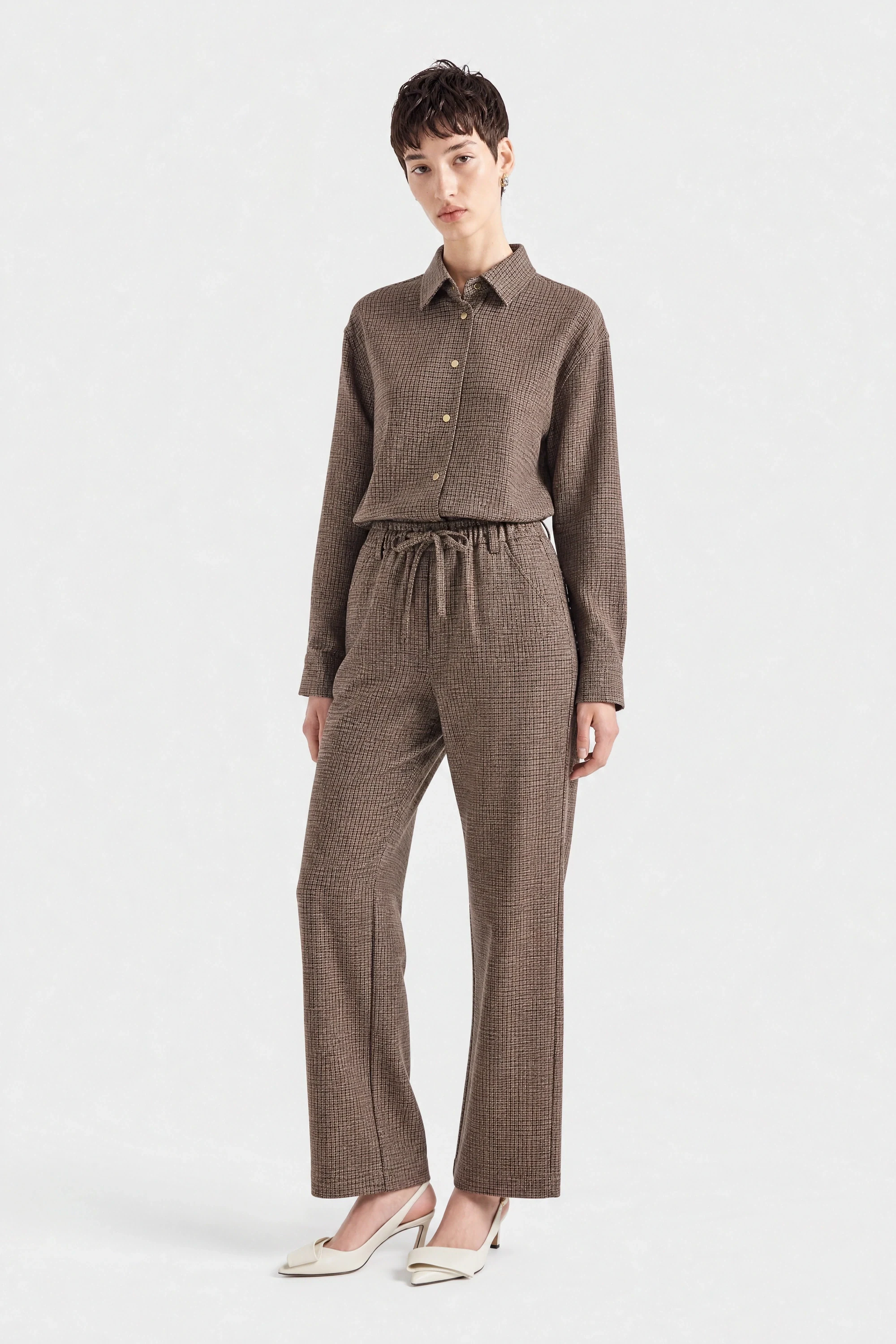
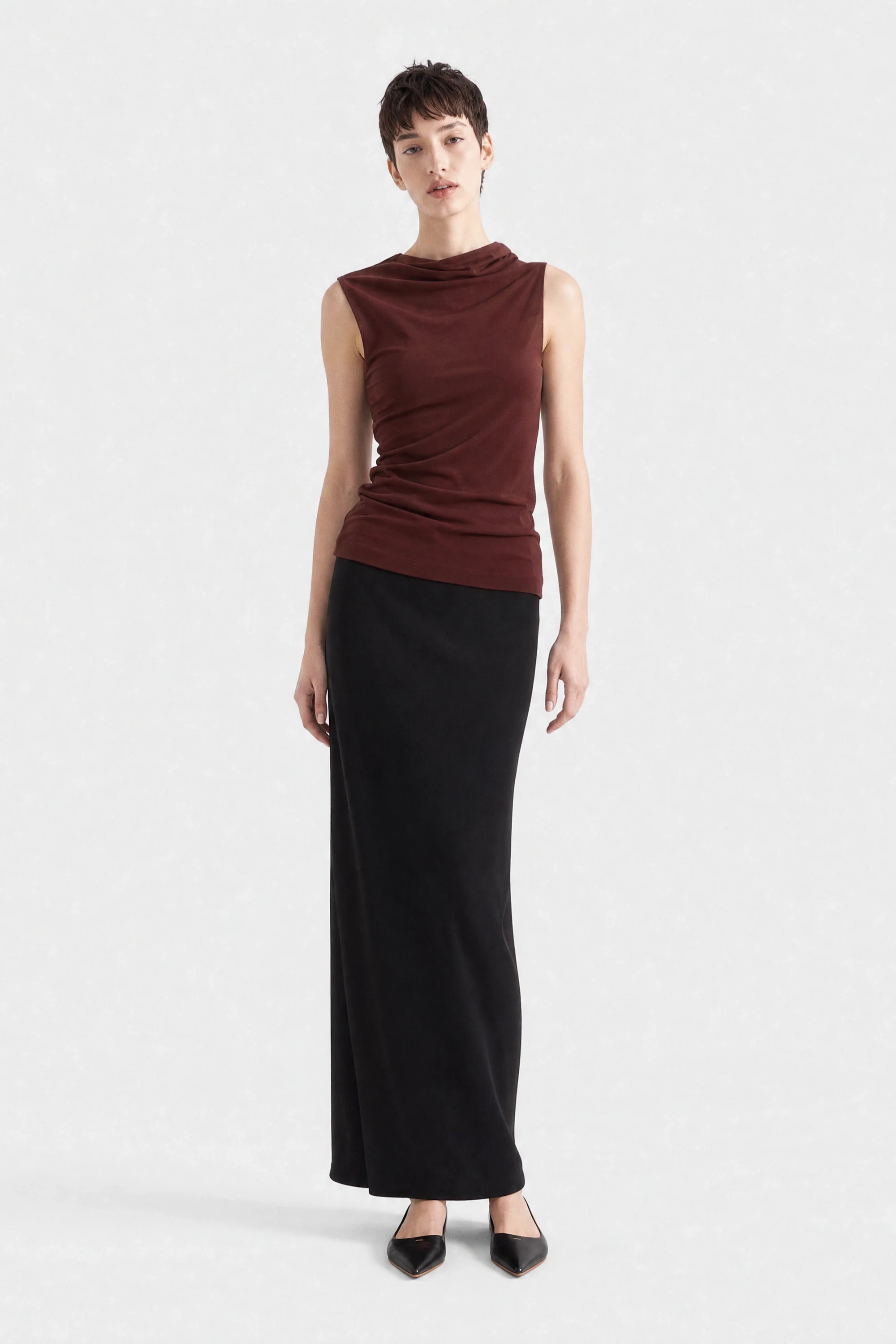
Converting a ghost mannequin shot to an on-model image reconstructs the same garment on an AI fashion model: the construction from the composite is preserved, and the customer finally sees it worn. For a catalogue where the samples are long gone — last season’s stock, wholesale ranges, discontinued colourways — it is often the only way to get on-model imagery at all. The conversion itself is a standard workflow — ghost mannequin to model walks through it, input to output.
Enterprise teams also use the reverse direction: generating ghost mannequin views from flat lays as a custom module, so a category grid stays uniform even when the source material was not. Both directions are covered in the platform overview, and Genera.School shows the workflow end to end.
A practical setup for 2026
For most apparel catalogues, the combination that holds up is:
- On-model lead image — answers fit and styling.
- Ghost mannequin technical view — answers construction and colour.
- Detail close-ups — texture, hardware, print at scale.
- A campaign or lifestyle frame where the category justifies it.
The change worth noting is that only the second of those now requires a mannequin, a studio and a compositor. The rest can be generated from the same source garment, which is what makes it realistic to give every SKU four good images instead of giving the top sellers four and everything else one.
Related reading: From Tech Pack to Photo and How Much Does a Fashion Photoshoot Cost in 2026?.
FAQ
02- What is ghost mannequin photography?
- A technique where a garment is photographed on a mannequin and the mannequin is removed in post-production, leaving the item holding its three-dimensional shape with the inside of the collar visible — hence "invisible mannequin".
- How much does a ghost mannequin shot cost?
- It varies by market and volume, but a ghost mannequin image is typically several times the cost of a plain packshot because it requires at least two exposures per garment plus compositing. Most of the cost is post-production, not the shoot.
- Is ghost mannequin better than on-model photography?
- It is better at showing construction and true colour, and worse at answering fit and drape. Many catalogues use both — ghost mannequin as the technical view, on-model as the lead image.


